

03 Oct The Beauty of Slow Play: Choosing Quality over Quantity in Toys
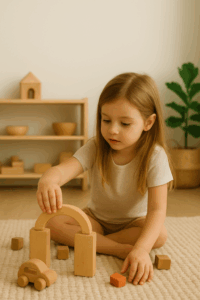
A growing body of research suggests that an excess of toys can actually reduce the quality of children’s play. A well-known study from the University of Toledo found that toddlers with fewer toys engaged more deeply and creatively than those surrounded by an abundance.
High-quality toys—such as wooden blocks, art materials, dolls, and balance bikes—stand out because they are:
Durable and safe: Built to last, minimizing waste and repeated replacement.
Developmentally adaptable: Usable across different ages and stages.
Open-ended: Encouraging multiple uses rather than offering a single, scripted function.
These toys invite children to return again and again, discovering new possibilities each time.
Benefits for Children and Families
Focusing on quality over quantity supports healthy development in several ways:
Enhanced creativity: Fewer, versatile toys prompt children to invent games and repurpose objects in new ways.
Improved focus: A simplified play environment reduces overstimulation and helps children concentrate for longer periods.
Emotional resilience: Slow play nurtures patience and persistence as children experiment and problem-solve.
Family well-being: Parents benefit too—less clutter, fewer broken pieces, and a clearer sense of how toys are supporting growth.
How Parents Can Foster Slow Play at Home
You don’t need to overhaul your child’s entire playroom to embrace slow play. Small, intentional steps can make a significant impact:
Rotate toys: Keep only a limited selection accessible at a time, storing the rest to bring out later.
Choose mindfully: Invest in toys made from safe, sustainable, and versatile materials.
Encourage uninterrupted play: Allow children extended time without rushing or structuring every moment.
Model slower engagement: Join in play at your child’s pace, showing that creativity unfolds gradually.
Final Thoughts
Slow play is not just a parenting trend—it’s a research-supported approach to supporting children’s cognitive, emotional, and social growth. By choosing quality over quantity, families can cultivate play environments that foster imagination, focus, and joy.
In a world that often encourages more, faster, and newer, embracing the beauty of slow play is a conscious step toward giving children the space and tools they truly need to thrive.

Sorry, the comment form is closed at this time.